Star Wrath 0.7.0: New horizons
Wanderers! We’re happy to release the 0.7.0 update that introduces important changes to the project’s core mechanics and major changes to the economy. But this is just the beginning. We are planning to further develop these systems in the future, and your feedback and participation will help determine our next steps.
General progress reset
Due to the large-scale changes to the game systems in the 0.7.0 update, we have carried out a complete progress reset for all players.
This is necessary to ensure the proper functioning of the modified mechanics, the updated economy, and the new progression system, as well as to ensure that all test participants start this new phase of the project on an equal footing.
All previously purchased packs have been restored to your accounts. Players who purchased Gold packs have been credited with equivalent Ether packs.
We’d also like to give you advance notice: after analyzing the results of the 0.7.0 update, game statistics, and your feedback, another progress reset will be necessary. This will allow us to fine-tune the new systems and prepare the project for the next stage of development.
Thank you for continuing to participate in testing and helping us create Star Wrath!
Abandoning complete block destructibility and module loss
The first and perhaps the most noticeable change in the 0.7.0 update concerns ship destructibility and the loss of modules upon destruction.
During the closed beta testing, we carefully analyzed the statistics, collected your feedback, and conducted a series of internal tests. As a result, we realized that some mechanics slow down the gameplay in practice even if they initially looked good on paper. Therefore, we decided to cancel the release of the 0.6.0 update and focus on reworking these aspects of the game.
One such mechanic was the complete loss of destroyed structural blocks. As we’ve already mentioned in the Developer blog, this system significantly increased the number of routine tasks after each battle and distracted players from what matters most: combat, exploration, and progression.
Starting with the 0.7.0 update, when a ship is destroyed, you will no longer lose modules, consumables, or ammunition. As before, you only risk losing resources and loot that you collected during the battle.
However, the damage system itself isn’t going anywhere. During combat, enemies will still be able to shoot off individual parts of your ship, changing the course of the battle and forcing you to adapt on the fly.
Ship constructor overhaul
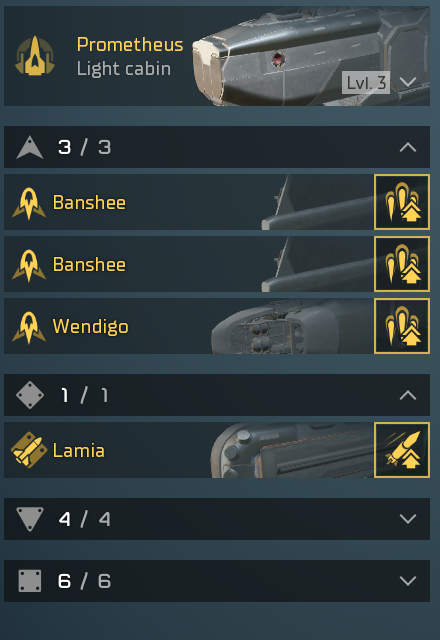
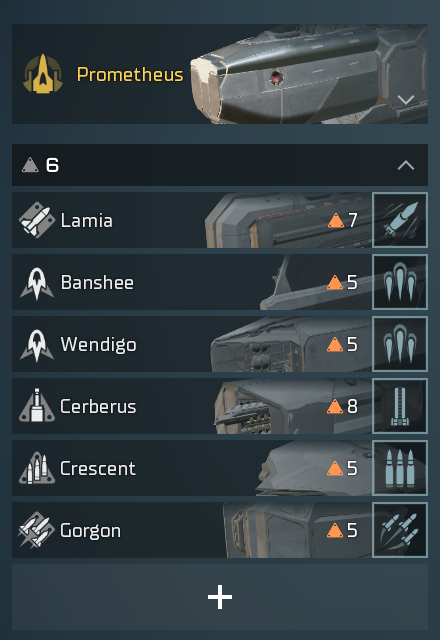
The next major change concerns the ship constructor. Our main goal is to give players more freedom when creating ships. Therefore, we have eliminated the slot system, introduced a general limit on the number of blocks available for each cabin, and brought back the energy system familiar to some players from the Project Void Space combat system testing.
One of the key changes to the constructor is the removal of the strict binding of weapon types to specific cabins. Now, any ship can be equipped with both kinetic and energy weapons, allowing you to combine them to best suit your tactic.
We’ve also significantly expanded the shipbuilding capabilities. Structural parts can now be rotated along all three axes, paving the way for even more uncommon and unconventional ship designs.
Energy system
Starting with the 0.7.0 update, the construction of a ship will include an energy system, and each cabin will have two new parameters: base power and additional power.
- Base power is used for weapons.
- Additional power is used for engines.
If necessary, some of the base power can be reallocated to additional power, increasing the available energy reserve for engines. This will allow you to create both heavy combat ships and light, highly maneuverable ships.
If necessary, some of the base power can be reallocated to additional power, increasing the available energy reserve for engines. This will allow you to create both heavy combat ships and light, highly maneuverable ships.
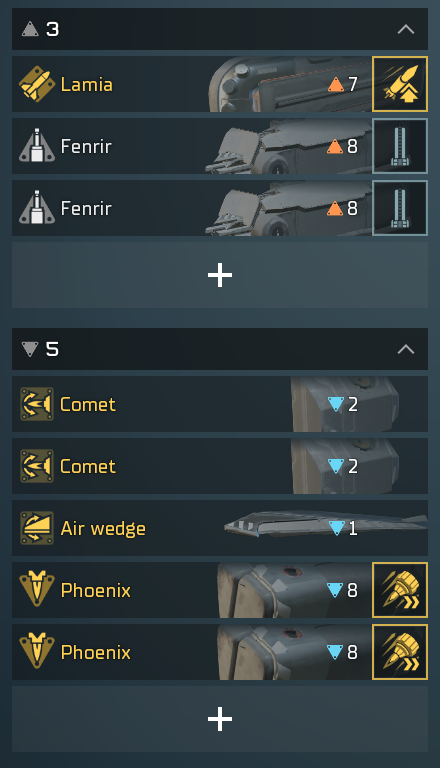
Each type of weapon has a fixed amount of energy that it uses when installed.
Weapon types and the amount of base power consumed:
- Light weapons blocks: 5 units of base power
- Heavy weapons blocks: 8 units of base power
- Energy weapons blocks: 5 units of base power
- Unguided missiles blocks: 5 units of base power
- LS blocks: 7 units of base power
Engine types and the amount of additional power consumed:
- Propulsion engine: 6 units of additional power
- Afterburner engine: 6 units of additional power
- Maneuvering engine: 1 unit of additional power
The new system is designed to increase the flexibility of the constructor and expand ship-building capabilities, meaning you’ll be able to decide for yourself how to allocate the available power.
Mass system
Starting with the 0.7.0 update, each cabin has a mass limit that directly affects the ship’s speed and handling. Each cabin has a nominal mass and a mass limit. The lighter the assembled ship in relation to its nominal mass, the higher its speed, boost, and maneuverability. As the weight increases, the engines’ specific thrust decreases, causing the ship to become less responsive and lose some of its speed. If the mass exceeds the maximum permissible value, the ship will be unable to take off and enter battles.
Changes to ship parts
The first changes were made to the ships’ wings, and as of the 0.7.0 update, they increase the ship’s tilt speed in the plane in which they are mounted. Wing effectiveness depends on several factors at once: its position on the hull and the ship’s current speed. The faster the ship, the more pronounced the effect, allowing for quicker maneuvering.
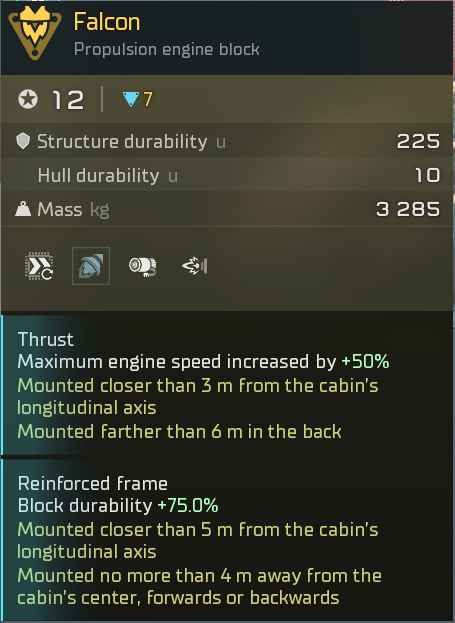
We are also beginning to gradually introduce unique features for structural parts. Some parts will gain additional properties that are activated only when certain conditions are met. For example, a part’s perk may only function if the part is installed no more than 5 meters away from the center of the cabin.
The engines have also been updated. As a result, the same engine now affects the flight dynamics differently for ships of varying masses. Engines now also apply an actual force to the ship, measured in newtons. Previously, engines only provided a fixed speed boost. At the same time, certain aspects of engine mechanics have been updated, making ship control feel more comfortable and intuitive in a number of situations, for example, when using engines to brake while turning the ship 180 degrees.
Projects window
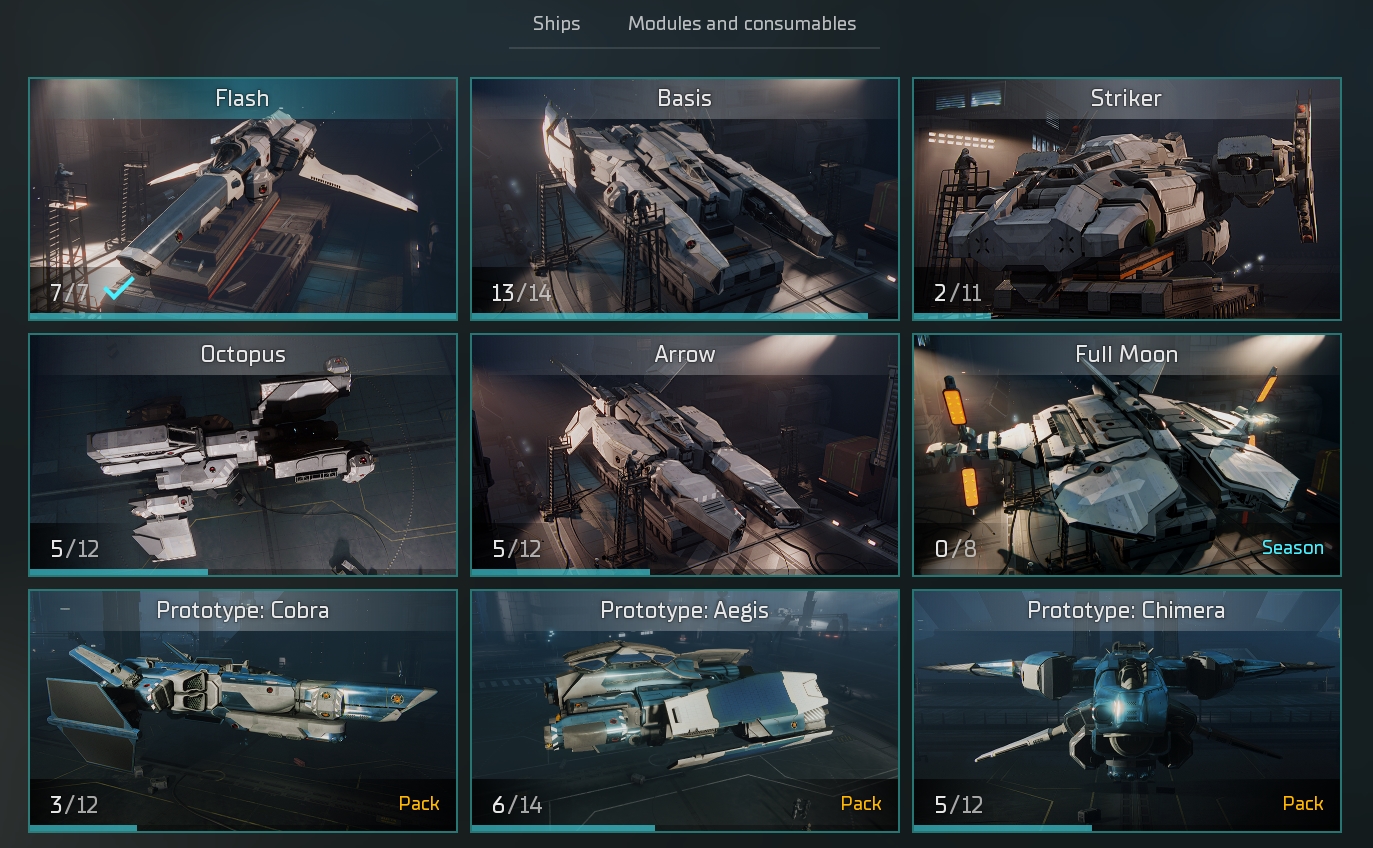
The “Collections” window is now called “Projects.” This is the new hub for player progression, where all available ship blueprints and their associated progression elements are gathered in one place. We’ve also added navigation to this section so you can switch between the “Ships” and “Modules and consumables” tabs and find the information you need more quickly.
When you select any ship, there will be a separate project screen where you can see:
- the ship’s blueprint;
- a progress bar showing how many of the required schematics for that specific project you’ve unlocked;
- all available schematics for related structural blocks, as well as the number of unlocked parts in your storage;
- the requirements for obtaining each individual part.
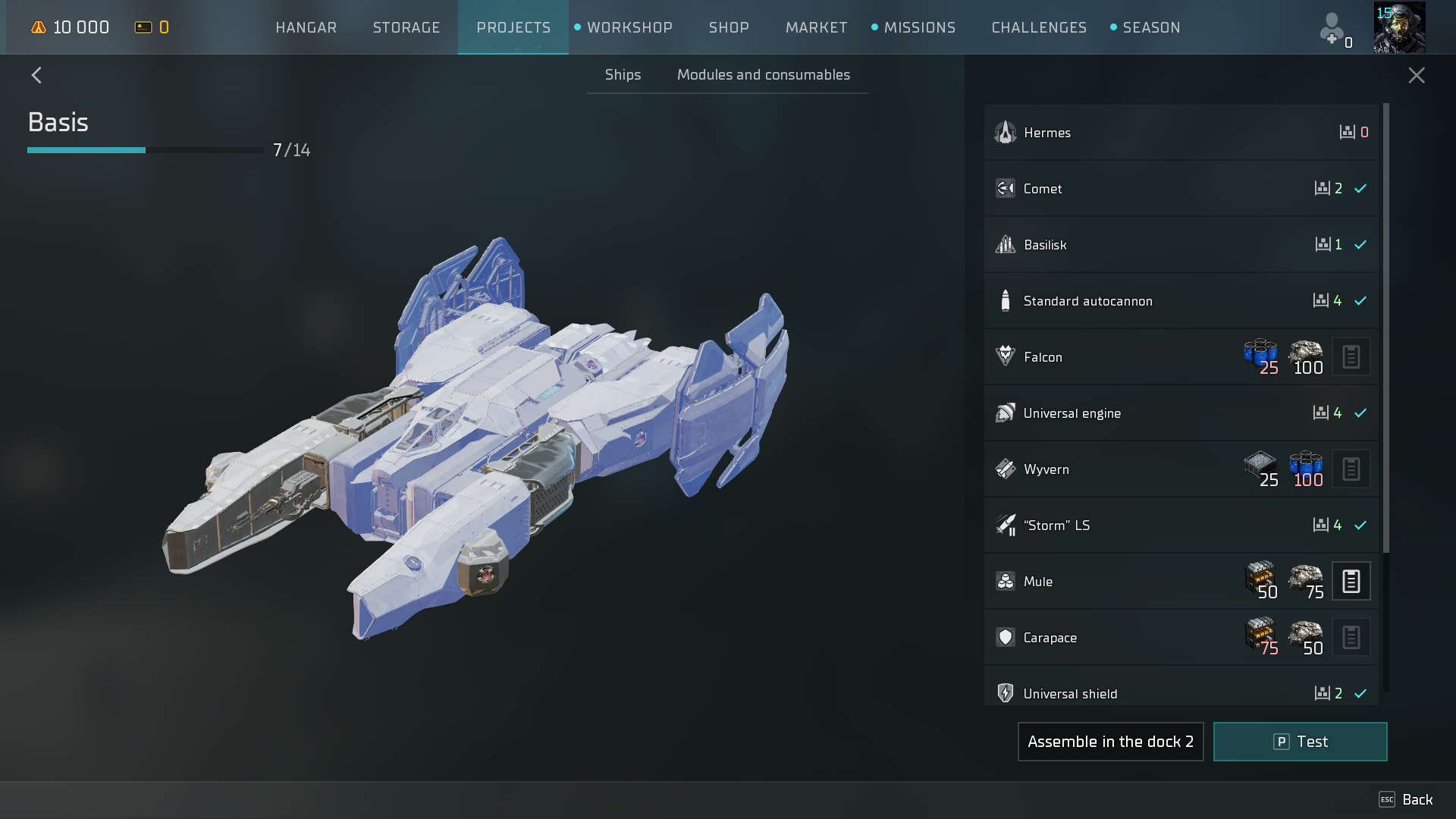
The “Projects” system will make it easier to track your progress and understand which objectives you need to complete to unlock new capabilities. Some schematics can be unlocked by collecting a certain amount of resources, while others require completing in-game missions. For some items, only the source will be specified, for example, a seasonal pass or special events.
Dividing maps into PvP and PvE
During the closed beta testing, we saw that players come to Star Wrath seeking different gameplay experiences. Some prefer to peacefully explore maps, complete missions, and gather resources. Others seek constant PvP battles and are willing to take risks for more valuable loot. Therefore, in the 0.7.0 update, we’ve divided the maps into several categories, each tailored to a specific playstyle.
PvE maps
The “Cooperation” modifier is now a full-fledged game mode. PvE maps are a safe space for exploration, completing missions, and gathering basic resources without the threat of attack from other players. They’re perfect for newcomers, as well as those who want to focus on developing their ship, exploring the world, and battling exclusively against AI-controlled opponents.
PvPvE maps
This is the game format familiar to the closed beta testing participants, where clashes between pilots remain an integral part of the gameplay. The most valuable resources, events, and rewards will still be concentrated in the most dangerous areas of the locations, where the risk always matches the potential reward.
There are now higher-difficulty maps, both PvE and PvPvE, for experienced wanderers. These will feature stronger enemies, rare resources, and a significantly higher threat level. It is here that players will be able to obtain materials for crafting the most advanced equipment.
We have also revised the map modifier system. The following modifiers will be removed from rotation:
- “Cooperation”
- “Surplus resources”
- “Data interception”
At the same time, some of the mechanics of those modifiers will become part of the core gameplay. For example, “Data interception” will become a dynamic event that can be randomly triggered during battle on PvPvE maps.
Changes to the map modifier schedule
We’ve revised the map modifier system and the logic for when they’re activated throughout the day to give you more variety while playing. Starting with the 0.7.0 update, map rotation within each mode will occur every 20 minutes throughout the day, and 4 maps will be available simultaneously for each gameplay type: 2 PvE maps and 2 PvPvE maps of varying difficulty. However, until you reach account level 3, only the “Moon” map will be available to you with both PvE and PvPvE modes.
New economy and resource system
One of the key changes in the 0.7.0 update is the overhaul of the in-game economy. As part of these changes, we are updating the currency system: credits will be replaced by gold, and gold will give way to a new premium currency called ether.
Ether is the new premium currency in Star Wrath. It is used to store capital and conduct large-scale transactions between corporations. The amount of ether is strictly limited by the network protocol: it is impossible to create new units or counterfeit existing ones. If necessary, ether can be exchanged for gold at the in-game exchange rate.
Changes to the resource system
We’ve developed a new resource system for the 0.7.0 update. To make resource gathering more predictable, we’ve replaced the random distribution with resource zones. Now, each type of material can be found in specific areas of a given map.
Currently, there are 6 different zones on the maps:
- Electrical: components related to power, electronics, and power systems.
- Mining: minerals and basic resources needed for production.
- Mechanical: parts and materials related to mechanisms and structures.
- Technological: computer equipment, hardware, analyzers, and high-tech components.
- Civilian: everyday items, valuables, and artifacts from humanity’s past.
- Security: security equipment, protective gear, and consumables.
Production recipes have been completely overhauled to accommodate the new resource system. Now, crafting parts, modules, ammunition, and consumables will be directly linked to finding and gathering the necessary materials in specific areas of the map. By knowing in advance where the required components are found, you’ll be able to plan your expeditions more effectively.
Market
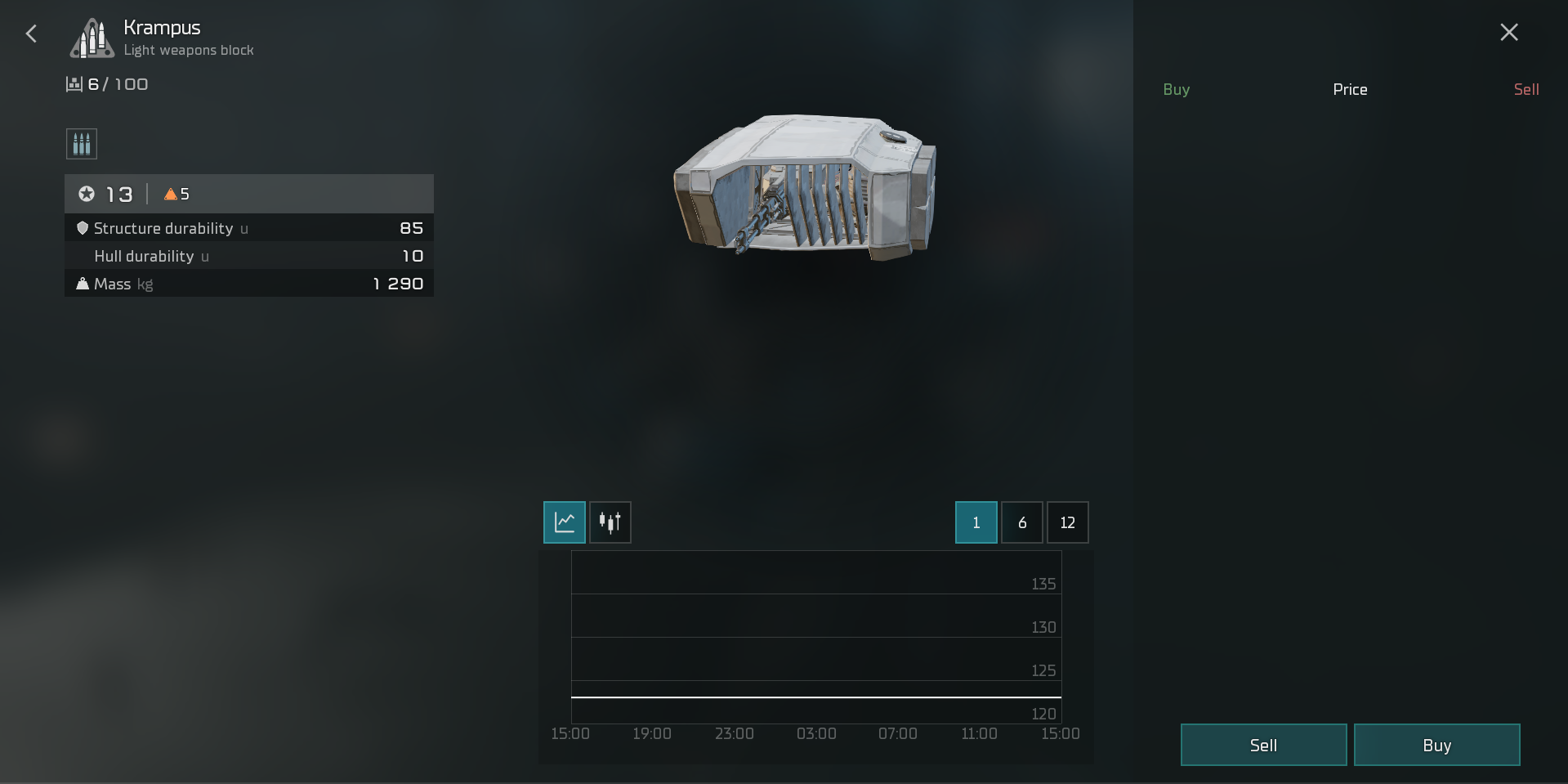
As part of the economic overhaul in the 0.7.0 update, we’re introducing the market system for player-to-player trading. Resources you find, equipment you craft, and any surplus items can now be listed for sale to other wanderers.
The market will become an important part of the new economic system: players will be able to specialize in gathering specific resources, crafting equipment, or searching for rare items, creating a fully fledged exchange among the player community.
The following categories of items are available for trade on the market:
- Resources: materials found during battles and required for production
- Modules: equipment for outfitting ships
- Consumables
- Structural blocks
The new economic model is designed to make resource gathering more diverse, offering the opportunity to obtain necessary components not only through your own expeditions but also through interaction with other wanderers. Some will venture into dangerous sectors in search of rare resources, some will focus on production, and others will seek out profitable deals on the market.
Other changes
- Maximum player level increased to 20.
- Workbenches removed from the workshop.
- Added the ability to invert the Y-axis of the right stick on the controller.
- Improved the rocket explosion effect.
- Enemy ships (NPCs) can now use consumable items.
- Added a setting that allows you to adjust the transparency of the central combat interface element.
- Changed the parameters of stationary turrets.
- Improved a number of sounds and sound effects.
- Improved certain interface elements.
- Improved certain textures and visual effects.
- Improved a number of texts and descriptions.
Q&A with the developers #4: 0.7.0 update
Thank you for your interest in the upcoming update! We have carefully reviewed all of your questions and prepared our responses.
Star Wrath 0.7.1 - Small update
Attention, Wanderers! We've released a small 0.7.1 update focused on fixing bugs and issues discovered after the launch of Update 0.7.0.